Friday, November 09, 2018

Remembrance of things past

Remembrance of things past


Love is space and time measured by the heart. --Marcel Proust

The Madeleine Excerpt from Remembrance of Things Past

--by Marcel Proust, Nov 09, 2018

I feel that there is much to be said for the Celtic belief that the souls of those whom we have lost are held captive in some inferior being, in an animal, in a plant, in some inanimate object, and so effectively lost to us until the day (which to many never comes) when we happen to pass by the tree or to obtain possession of the object which forms their prison. Then they start and tremble, they call us by our name, and as soon as we have recognised their voice the spell is broken. We have delivered them: they have overcome death and return to share our life. And so it is with our own past. It is a labour in vain to attempt to recapture it: all the efforts of our intellect must prove futile. The past is hidden somewhere outside the realm, beyond the reach of intellect, in some material object (in the sensation which that material object will give us) which we do not suspect. And as for that object, it depends on chance whether we come upon it or not before we ourselves must die. Many years had elapsed during which nothing of Combray, save what was comprised in the theatre and the drama of my going to bed there, had any existence for me, when one day in winter, as I came home, my mother, seeing that I was cold, offered me some tea, a thing I did not ordinarily take. I declined at first, and then, for no particular reason, changed my mind.
She sent out for one of those short, plump little cakes called 'petites madeleines,' which look as though they had been moulded in the fluted scallop of a pilgrim's shell. And soon, mechanically, weary after a dull day with the prospect of a depressing morrow, I raised to my lips a spoonful of the tea in which I had soaked a morsel of the cake. No sooner had the warm liquid, and the crumbs with it, touched my palate, a shudder ran through my whole body, and I stopped, intent upon the extraordinary changes that were taking place. An exquisite pleasure had invaded my senses, but individual, detached, with no suggestion of its origin. And at once the vicissitudes of life had become indifferent to me, its disasters innocuous, its brevity illusory--this new sensation having had on me the effect which love has of filling me with a precious essence; or rather this essence was not in me, it was myself. I had ceased now to feel mediocre, accidental, mortal. Whence could it have come to me, this all-powerful joy? I was conscious that it was connected with the taste of tea and cake, but that it infinitely transcended those savours, could not, indeed, be of the same nature as theirs. Whence did it come? What did it signify? How could I seize upon and define it?
I drink a second mouthful, in which I find nothing more than in the first, a third, which gives me rather less than the second. It is time to stop; the potion is losing its magic. It is plain that the object of my quest, the truth, lies not in the cup but in myself. The tea has called up in me, but does not itself understand, and can only repeat indefinitely with a gradual loss of strength, the same testimony; which I, too, cannot interpret, though I hope at least to be able to call upon the tea for it again and to find it there presently, intact and at my disposal, for my final enlightenment. I put down my cup and examine my own mind. It is for it to discover the truth. But how? What an abyss of uncertainty whenever the mind feels that some part of it has strayed beyond its own borders; when it, the seeker, is at once the dark region through which it must go seeking, where all its equipment will avail it nothing.
Seek? More than that: create. It is face to face with something which does not so far exist, to which it alone can give reality and substance, which it alone can bring into the light of day. And I begin again to ask myself what it could have been, this unremembered state which brought with it no logical proof of its existence, but only the sense that it was a happy, that it was a real state in whose presence other states of consciousness melted and vanished. I decide to attempt to make it reappear. I retrace my thoughts to the moment at which I drank the first spoonful of tea. I find again the same state, illumined by no fresh light. I compel my mind to make one further effort, to follow and recapture once again the fleeting sensation. And that nothing may interrupt it in its course I shut out every obstacle, every extraneous idea, I stop my ears and inhibit all attention to the sounds which come from the next room. And then, feeling that my mind is growing fatigued without having any success to report, I compel it for a change to enjoy that distraction which I have just denied it, to think of other things, to rest and refresh itself before the supreme attempt. And then for the second time I clear an empty space in front of it. I place in position before my mind's eye the still recent taste of that first mouthful, and I feel something start within me, something that leaves its resting-place and attempts to rise, something that has been embedded like an anchor at a great depth; I do not know yet what it is, but I can feel it mounting slowly; I can measure the resistance, I can hear the echo of great spaces traversed.
Undoubtedly what is thus palpitating in the depths of my being must be the image, the visual memory which, being linked to that taste, has tried to follow it into my conscious mind. But its struggles are too far off, too much confused; scarcely can I perceive the colourless reflection in which are blended the uncapturable whirling medley of radiant hues, and I cannot distinguish its form, cannot invite it, as the one possible interpreter, to translate to me the evidence of its contemporary, its inseparable paramour, the taste of cake soaked in tea; cannot ask it to inform me what special circumstance is in question, of what period in my past life. Will it ultimately reach the clear surface of my consciousness, this memory, this old, dead moment which the magnetism of an identical moment has travelled so far to importune, to disturb, to raise up out of the very depths of my being? I cannot tell. Now that I feel nothing, it has stopped, has perhaps gone down again into its darkness, from which who can say whether it will ever rise? Ten times over I must essay the task, must lean down over the abyss. And each time the natural laziness which deters us from every difficult enterprise, every work of importance, has urged me to leave the thing alone, to drink my tea and to think merely of the worries of to-day and of my hopes for to-morrow, which let themselves be pondered over without effort or distress of mind. And suddenly the memory returns.
The taste was that of the little crumb of madeleine which on Sunday mornings at Combray (because on those mornings I did not go out before church-time), when I went to say good day to her in her bedroom, my aunt LĂ©onie used to give me, dipping it first in her own cup of real or of lime-flower tea. The sight of the little madeleine had recalled nothing to my mind before I tasted it; perhaps because I had so often seen such things in the interval, without tasting them, on the trays in pastry-cooks' windows, that their image had dissociated itself from those Combray days to take its place among others more recent; perhaps because of those memories, so long abandoned and put out of mind, nothing now survived, everything was scattered; the forms of things, including that of the little scallop-shell of pastry, so richly sensual under its severe, religious folds, were either obliterated or had been so long dormant as to have lost the power of expansion which would have allowed them to resume their place in my consciousness. But when from a longdistant past nothing subsists, after the people are dead, after the things are broken and scattered, still, alone, more fragile, but with more vitality, more unsubstantial, more persistent, more faithful, the smell and taste of things remain poised a long time, like souls, ready to remind us, waiting and hoping for their moment, amid the ruins of all the rest; and bear unfaltering, in the tiny and almost impalpable drop of their essence, the vast structure of recollection. And once I had recognized the taste of the crumb of madeleine soaked in her decoction of lime-flowers which my aunt used to give me (although I did not yet know and must long postpone the discovery of why this memory made me so happy) immediately the old grey house upon the street, where her room was, rose up like the scenery of a theatre to attach itself to the little pavilion, opening on to the garden, which had been built out behind it for my parents (the isolated panel which until that moment had been all that I could see); and with the house the town, from morning to night and in all weathers, the Square where I was sent before luncheon, the streets along which I used to run errands, the country roads we took when it was fine. And just as the Japanese amuse themselves by filling a porcelain bowl with water and steeping in it little crumbs of paper which until then are without character or form, but, the moment they become wet, stretch themselves and bend, take on colour and distinctive shape, become flowers or houses or people, permanent and recognisable, so in that moment all the flowers in our garden and in M. Swann's park, and the water-lilies on the Vivonne and the good folk of the village and their little dwellings and the parish church and the whole of Combray and of its surroundings, taking their proper shapes and growing solid, sprang into being, town and gardens alike, all from my cup of tea. 


Marcel Proust (1871–1922) was a French novelist and author of In Search of Lost Time (also known as Remembrance of Things Past), a seven-volume novel based on Proust’s life told psychologically and allegorically.

It is very hard to live alone. But many days your mind remembers as clear as glass memories of happy times and moments that play out in our minds. They are secret treasures to keep.

Thursday, October 18, 2018

Presence and Prayer, by Michael Conge

Presence and Prayer by Parabola Magazine

Presence and Prayer, by Michel Conge


S
ince you agree that a particle of divine energy animates you, you can understand that a contact, a direct perception of this circulating energy, must be possible. You can also understand that the key to the mystery of consciousness resides in this capacity of perception, which is not a mental act but the awakening of a dormant property.
Everything is here.
If this living and divine energy-substance were not in us, there would be no sense in trying anything at all.
We are separated from ourselves, and also, of course, from God, only through our forgetting or our ignorance.
Remembering oneself means recognizing oneself in a rediscovered and eternally present energy, free of all form.
This rediscovery must not be the result of thought or desire alone; the proof must be brought by our whole mass, in order that the contact becomes in fact a fusion with no gap through which doubt might still slip in.
It is only the Absolute whose reality we are incapable of knowing or touching, but this is not a permanent situation.
Let us move on to speak of prayer. Prayer is not a petition. It is another special aspect of the contact with the divine spark that we can experience in ourselves. Without this contact, we consider ourselves to be a “tiny being”; as you say in your letter, “How can such a tiny being as me…?” That’s a silly way of looking at it.
You are this Life that circulates. To acknowledge it with your mass—without words and without desire—that is prayer.
Know the kingdom and its justice and all else will be added unto you.1
Know the truth, and the truth will set you free.2
We need to ask for nothing. It is illusion—the ego—which asks. To come back to myself as “I”—awakened to the mirage of the “person,” the “name,” and the “form”—is to be fulfilled.
I do not need to pray in order to be; I need to recognize that I AM—that’s what prayer is. And from this rediscovered fact, Faith, Love, and Hope are born, very naturally and without any subjective distortion.
That’s what destiny really is—rediscovering what I am and, in fact, what I have never ceased to be: a spark that is never extinguished, a spark which creates. But never forsake the spark—I AM—for the illusion of the created form.
Those who pray without seeking to awaken their reality will fall into an even greater confusion than if they had asked for nothing.♦

1 Matthew 6:33, “But seek ye first the kingdom of God, and his righteousness; and all these things shall be added unto you.”
2 John 8:32, “And ye shall know the truth, and the truth shall make you free.”
From Parabola Volume 42, No. 3, “The Sacred,” Fall 2017. This issue is available to purchase here. If you have enjoyed this piece, consider subscribing


Thursday, October 11, 2018

Truth about UFOs


Alien-Hunting Agents Seek the Truth About UFOs in 'Project Blue Book'


NEW YORK — During the 1950s and 1960s, were extraterrestrials visiting the United States? At the time, a spate of panicky sightings of unidentified flying objects (UFOs)  thought to be "alien" in origin were reported across the country, prompting the U.S. Air Force to create a top-secret program dedicated to the investigation of unexplained phenomenon related to UFOs.
Under the code name "Project Blue Book," the Air Force documented and scrutinized 12,000 UFO sightings from 1952 to 1969, led by J. Allen Hynek, a former astronomy professor at The Ohio State University. The project's efforts — set against a suspenseful undercurrent of political intrigue — come to life in a new dramatic television series, which shares some of the long-buried secrets of this mysterious initiative.
At a New York Comic Con (NYCC) panel on Oct. 6, actors and creators of the History channel's "Project Blue Book" introduced the audience to the story of federal agents hunting UFOs and the manipulation of the truth happening behind the scenes. Based on declassified files in the federal archive — including 700 cases of UFO-related incidents that remain unsolved — the series confronts a question that still fascinates humans decades after the project's end: Are we alone in the universe? [9 Strange, Scientific Excuses for Why Humans Haven't Found Aliens Yet]

A first look at a new UFO Series

Alien-Hunting Agents Seek the Truth About UFOs in 'Project Blue Book'
Main Link

Wednesday, October 10, 2018

The Wisdom of the Tao


Wayne Dyer and Oprah Winfrey - The Wisdom of the Tao (Full)

I am new to learning the messages from The Tao. I read a little from it every day basically to find peace in my heart and rediscover joy. I am very depressed and lost. I have lost most of my lovely companions and feel stranded and alone. I still have my birds Phoebe, a macaw, and Dorian, an African Gray. I am learning how very much they love me. And I am so grateful for their love.

But I realize I am never alone and life is a journey and I welcome all of it. It's hard and strange and to know where I fit now. So I am constantly looking on the internet for help. This message is wonderful and I am sure that I will listen to it over and over.

This is a wonderful video and I wanted to make sure I shared it.

Tuesday, October 09, 2018

A First Glimpse of Our Magnificent Earth, Seen From the Moon

https://www.nytimes.com/2018/10/02/opinion/earthrise-moon-space-nasa.html

A First Glimpse of Our Magnificent Earth, Seen From the Moon

The first people to view our planet from the moon were transformed by the experience. In this film, they tell their story.

Earthrise By Emmanuel Vaughan-Lee The first people to see the Earth from the moon were transformed by the experience. In this film, they tell their story.

Friday, September 21, 2018

Born on this date September 21st


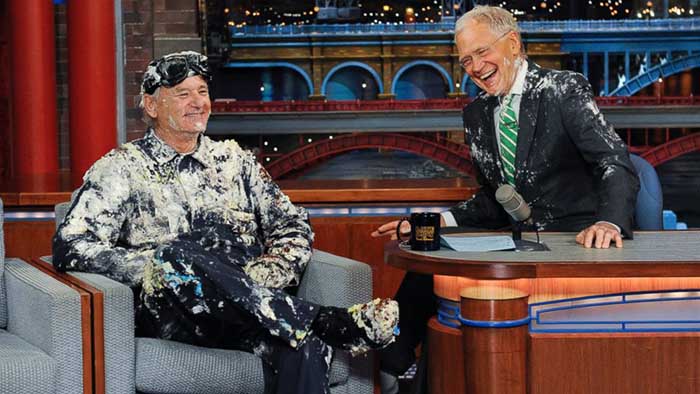
Bill Murray
https://en.wikipedia.org/wiki/Bill_Murray

"Somewhere there's a score being kept, so you have an obligation
to live life as well as you can, be as engaged as you can. "


https://www.brainyquote.com/authors/bill_murray
Bill Murray quotes 1

https://en.wikiquote.org/wiki/Bill_Murray
Bill Murray quotes 2


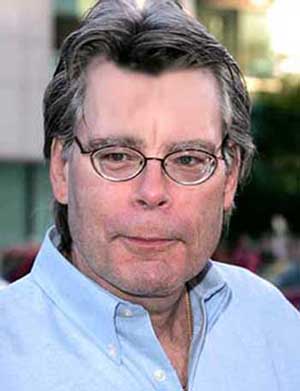
Stephen King
https://en.wikipedia.org/wiki/Stephen_King

September 21, 1947


Stephen King Google Videos

Stephen King Quotes 1

Stephen King wiki quotes

One of those funny days when I decide to check my blog and see if I feel like posting anything and two of the most wonderful interesting people of my lifetime show up for today. Thank you Universe.


Life is like a wheel it always comes around to remind you of where you started.

Thanks to Crystal Links Ezine for letting me use her wonderful links that made my day.

Humanity's Major Transition From the Age of Pisces to Aquarius

Friday, July 20, 2018

You are a Prophet

"You Are a Prophet"

Listen to my piece "You Are a Prophet" here: http://bit.ly/YourProphecy
Here's how it starts: Your imagination is the single most important asset you possess. It's your power to create mental pictures of things that don't exist yet and that you want to bring into being. It's the magic wand you use to shape your future.
.
And so in your own way, you are a prophet. You generate countless predictions every day. Your imagination is the source, tirelessly churning out images of what you will be doing later.
.
The featured prophecy of the moment may be as simple as a psychic impression of yourself eating a fudge brownie at lunch or as monumental as a daydream of some year building your dream home by a lake or sea.
.
Your imagination is a treasure when it spins out scenarios that are aligned with your deepest desires. In fact, it's an indispensable tool in creating the life you want; it's what you use to form images of the conditions you'd like to inhabit and the objects you hope to wield. Nothing manifests on this planet unless it first exists as a mental picture.
.
But for most of us, the imagination is as much a curse as a blessing. We're often just as likely to use it to conjure up premonitions that are at odds with our conscious values. That's the result of having absorbed toxic programming from the media and from our parents at an early age and from other influential people in our past.
.
Fearful fantasies regularly pop up into our awareness, many disguising themselves as rational thoughts and genuine intuitions. Those fearful fantasies may hijack our psychic energy, directing it to exhaust itself in dead-end meditations . . . .
.
Read or hear the rest: http://bit.ly/YourProphecy
+
Art by Sofia Fine

Tuesday, April 24, 2018

How Philip K. Dick redefined what it means to be (in)human

How Philip K. Dick redefined what it means to be (in)human


Fifty years ago, Philip K. Dick’s novel Do Androids Dream of Electric Sheep? questioned what it means to be human in ways that have an immense lasting influence.

The action of the novel – and the Blade Runner films based on it – largely revolves around the central tension and struggle between biological humans and artificially constructed androids. Arguably, however, the story’s greatest continuing relevance is in the way it challenges a particular image of the human that has come to dominate in modern Western culture. This image portrays certain qualities – whiteness, masculinity, heterosexuality, rationalism, professional success and physical prowess – as the ideal symbols of humanity’s success.

The novel revolves around the efforts of bounty hunter Rick Deckard, in his quest to identify, track, and destroy androids posing as biological humans. Unsurprisingly, he repeatedly meets violent resistance. Both his livelihood and his life depend on his ability to tell the difference between humans and androids. Ultimately, however, Deckard is forced to face the possibility that there may not be any fundamental difference. This causes him to undergo a deep existential crisis, finding both his sense of identity, and his literal survival, severely threatened.

Deckard’s primary means of distinguishing between humans and androids is the Voight-Kampff test. Combining psychological analysis with a measurement of physiological reactions, the test seeks to determine whether a subject is capable of empathy. If the subject adequately demonstrates concern for the lives of others, they are deemed human, and allowed to live. If not, they are deemed non-human, and must be destroyed. Deckard’s transformation begins when he realises that some newer androids are capable of passing the test, and so passing for human.


A likely response to this dilemma would be to regard the test as fundamentally flawed. A better test would be needed, one based on identifying another trait as the essential feature to distinguish androids from humans. However, Deckard, and the reader with him, is ultimately led to a far more radical conclusion – that the test is accurate after all. That is, the capacity for empathy is the only value that should ever be used to determine the worth of another being.

Being human


This revelation is a kind of update on Descartes’ influential “cogito ergo sum”. In place of “I think, therefore I am,” Dick implicitly suggests, “she loves, therefore she is (human/worthy)”. (It is no coincidence that Rick Deckard’s name somewhat echoes that of RenĂ© Descartes.)

This “posthuman” gesture abandons any scientific, ontological or material basis for distinguishing between humans and non-humans. Yet it continues to capitalise on the widespread human sense that there is something special and valuable about humans. Such a sense is often referred to as a defining feature of “humanism”. What the novel offers us, then, is a kind of posthuman humanism.

On this basis, there is no being – whether mammal, robot, computer, bird, slug, stone, or star – that is excluded from the category of humanity on the basis of its physical nature. Conversely, each and any being may qualify as human by demonstrating empathy for other beings. Meanwhile, the term “human” has by this point come to mean nothing more than “worthy of existence”.

This is far from a mere philosophical or science-fictional game. To see its radical social and political significance in our world, we need only consider the range of ways people have been dehumanised over the millennia of (so-called) humanity’s existence. Slavery, colonialism, alienation, patriarchy, racial inequality, and virtually any form of systemic social injustice you can think of, involve presenting some beings as “less than human” in order to justify their exploitation.

For this reason, it is crucial that Deckard’s entire outlook and sense of self – rather than simply his understanding of the distinction between humans and machines – is thoroughly challenged. His (hetero)sexuality, his commitment to the values of marriage, family, legal and police justice, the importance of professional, financial and social success, all intact at the novel’s outset, have been radically undermined by its end. Seemingly a broken man, he is, nevertheless, left with an enduring sense of the primary importance of an unrestricted, non-prejudiced care or love for other beings.


Admittedly, Dick could have pushed this dimension further, as Octavia Butler, Samuel Delany and a host of more recent science fiction authors have done. But at least it is an integral part of the narrative. The recent film, Blade Runner 2049, in contrast, downplays this dimension, while retaining the central concern with the relationship between biological humans and artificial androids.

This may be one possible reason why the latest film has attracted great praise as well as intense critique. While Blade Runner 2049 continues to blur the boundary between human and machine, it seems to uphold the notion that, in the end, the goal of either would equate more-or-less to the supposed values of the average white, Western, heterosexual, bourgeois male. This, ultimately, risks undermining the radical political potential of the posthumanist experiment that drives the original story.
Do not miss reading the comments they are excellent. 

https://theconversation.com/how-philip-k-dick-redefined-what-it-means-to-be-in-human-92085

And also - https://en.wikipedia.org/wiki/RenĂ©_Descartes


Frans Hals - Portret van René Descartes.jpg

https://theconversation.com/blade-runner-2049-how-philip-k-dicks-classic-novel-has-stood-the-test-of-time-74940
Blade Runner 2049: how Philip K Dick’s classic novel has stood the test of time