How Philip K. Dick redefined what it means to be (in)human
Fifty years ago, Philip K. Dick’s novel Do Androids Dream of Electric Sheep? questioned what it means to be human in ways that have an immense lasting influence.
The action of the novel – and the Blade Runner films based on it – largely revolves around the central tension and struggle between biological humans and artificially constructed androids. Arguably, however, the story’s greatest continuing relevance is in the way it challenges a particular image of the human that has come to dominate in modern Western culture. This image portrays certain qualities – whiteness, masculinity, heterosexuality, rationalism, professional success and physical prowess – as the ideal symbols of humanity’s success.
The novel revolves around the efforts of bounty hunter Rick Deckard, in his quest to identify, track, and destroy androids posing as biological humans. Unsurprisingly, he repeatedly meets violent resistance. Both his livelihood and his life depend on his ability to tell the difference between humans and androids. Ultimately, however, Deckard is forced to face the possibility that there may not be any fundamental difference. This causes him to undergo a deep existential crisis, finding both his sense of identity, and his literal survival, severely threatened.
Deckard’s primary means of distinguishing between humans and androids is the Voight-Kampff test. Combining psychological analysis with a measurement of physiological reactions, the test seeks to determine whether a subject is capable of empathy. If the subject adequately demonstrates concern for the lives of others, they are deemed human, and allowed to live. If not, they are deemed non-human, and must be destroyed. Deckard’s transformation begins when he realises that some newer androids are capable of passing the test, and so passing for human.
A likely response to this dilemma would be to regard the test as fundamentally flawed. A better test would be needed, one based on identifying another trait as the essential feature to distinguish androids from humans. However, Deckard, and the reader with him, is ultimately led to a far more radical conclusion – that the test is accurate after all. That is, the capacity for empathy is the only value that should ever be used to determine the worth of another being.
Being human
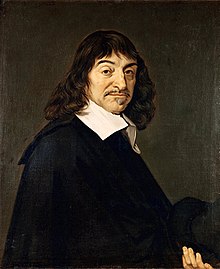
This revelation is a kind of update on Descartes’ influential “cogito ergo sum”. In place of “I think, therefore I am,” Dick implicitly suggests, “she loves, therefore she is (human/worthy)”. (It is no coincidence that Rick Deckard’s name somewhat echoes that of René Descartes.)
This “posthuman” gesture abandons any scientific, ontological or material basis for distinguishing between humans and non-humans. Yet it continues to capitalise on the widespread human sense that there is something special and valuable about humans. Such a sense is often referred to as a defining feature of “humanism”. What the novel offers us, then, is a kind of posthuman humanism.
On this basis, there is no being – whether mammal, robot, computer, bird, slug, stone, or star – that is excluded from the category of humanity on the basis of its physical nature. Conversely, each and any being may qualify as human by demonstrating empathy for other beings. Meanwhile, the term “human” has by this point come to mean nothing more than “worthy of existence”.
This is far from a mere philosophical or science-fictional game. To see its radical social and political significance in our world, we need only consider the range of ways people have been dehumanised over the millennia of (so-called) humanity’s existence. Slavery, colonialism, alienation, patriarchy, racial inequality, and virtually any form of systemic social injustice you can think of, involve presenting some beings as “less than human” in order to justify their exploitation.
For this reason, it is crucial that Deckard’s entire outlook and sense of self – rather than simply his understanding of the distinction between humans and machines – is thoroughly challenged. His (hetero)sexuality, his commitment to the values of marriage, family, legal and police justice, the importance of professional, financial and social success, all intact at the novel’s outset, have been radically undermined by its end. Seemingly a broken man, he is, nevertheless, left with an enduring sense of the primary importance of an unrestricted, non-prejudiced care or love for other beings.
Admittedly, Dick could have pushed this dimension further, as Octavia Butler, Samuel Delany and a host of more recent science fiction authors have done. But at least it is an integral part of the narrative. The recent film, Blade Runner 2049, in contrast, downplays this dimension, while retaining the central concern with the relationship between biological humans and artificial androids.
This may be one possible reason why the latest film has attracted great praise as well as intense critique. While Blade Runner 2049 continues to blur the boundary between human and machine, it seems to uphold the notion that, in the end, the goal of either would equate more-or-less to the supposed values of the average white, Western, heterosexual, bourgeois male. This, ultimately, risks undermining the radical political potential of the posthumanist experiment that drives the original story.
Do not miss reading the comments they are excellent.
https://theconversation.com/how-philip-k-dick-redefined-what-it-means-to-be-in-human-92085
And also - https://en.wikipedia.org/wiki/René_Descartes
https://theconversation.com/blade-runner-2049-how-philip-k-dicks-classic-novel-has-stood-the-test-of-time-74940 Blade Runner 2049: how Philip K Dick’s classic novel has stood the test of time
Art Bell was one of my dearest and oldest friends. We had not spoken together for about a month before he died, but the friendship remained strong. I can recall how we first met. Through my publicist, he sent me a tape of his late night show, which was then in the process of breaking out into a national phenomenon. He had heard me on Larry King's old late night radio show on the Mutual Network.
I don't remember what subject was covered on the tape, but Anne and I both loved the ambience of the show, its sense of mystery and excitement, and Art's voice. I agreed to be a guest, which was the beginning of a long association with the show and a deep friendship between me, Art, his first wife Ramona and my wife Anne.
The show was breaking new ground in a fundamental way. In those days before the internet, all public forae were carefully curated so that anything said on them would either conform to generally agreed notions of reality or be ridiculed. I'd ended up becoming a laughingstock for claiming that I'd had a close encounter of the third kind, and was routinely exposed in the media as a fool, essentially for having told the truth as I saw it. But Art had a different approach. He was more a listener than a talker by nature, and he had a very open mind. It wasn't that he would believe anything, but rather that he wouldn't disbelieve things simply because they violated consensus reality.
So I found a home on Coast-to-Coast AM--along with hundreds of others considered by the broader community to fall outside the consensus. This made for a wild--and wildly entertaining--radio program. But it was also a pioneering format. Instead of demanding that any and all claims stick to accepted norms, Art's show was saying, 'let's not believe or disbelieve, but rather let's keep an open mind.'
His listeners understood this. They understood that the show was not there to propagandize them into believing every wild claim that was made on it, but rather to allow them to entertain ideas that were generally rejected, scorned, derided and condemned. Not to believe them, but to explore them in the same way that Art did.
I found his skillful neutrality bracing and exciting and loved being on the show. I could at last tell my story as I had lived it in all its ambiguity and with all its contradictions. The listeners weren't for the most part believing or disbelieving my claims, but they were hearing and responding to my sincerity and that was enormously reassuring to a man who was otherwise being laughed at by millions.
A personal friendship developed as well. Anne and I would drive up to Pahrumph and spend weekends with Art and Ramona. Sometimes Art and I would do the show together in his studio. Mostly, though, the four of us talked and talked about life and just enjoyed one another. They took us to the spot where they'd seen a silver triangle heading toward Area 51, and we explored the mountains west of town together. It was, in short, a comfortable friendship and a very pleasant one.
At about that same time, Anne and I had run into financial trouble. We lost our home in upstate New York and ended up living in Texas with literally almost no money and a son in an expensive school. We sometimes had to choose between buying food and paying tuition. It was that stark.
Art was a generous man, and he suggested that I make a video of one of my meditations to sell on his show. I did this, and he sold it every night for weeks, asking for nothing in return except the satisfaction of knowing that he had helped his friend. Then, in 1998, I had the encounter with the Master of the Key, which set me on a journey of search through the scientific literature to see if any of the claims I remembered him making had any support.
To my surprise, I found that the collapse of the Gulf Stream that he predicted and the great storms that would accompany it were suggested in the climate record from the end of the last ice age. Art was fascinated and we ended up writing "Superstorm" together. When it came out, we were openly scorned by Matt Lauer on the Today show, and when Roland Emmerich's film based on it, "The Day After Tomorrow" appeared, the criticism became strident. Both left and right agreed: we were way off base. Our claims were nonsense.
I am very glad that Art lived to see "Ice Melt, Sea Rise and Superstorms" by leading climate expert James Hansen and 18 distinguished colleagues. Although they could never mention our work, their paper does support the idea that superstorms have happened in the past and describes the circumstances under which they could happen again. We both felt vindicated, and I was once again left wondering who in the world the Master of the Key was.
Art Bell was a pioneer of the open mind. He was a fine man with a generous heart and a great capacity for friendship. When Ramona died, he called me from their RV in tears. He'd waked up and found her. He was contemplating suicide. Anne and I rushed to Pahrumph and spent some time with him. We ended up missing Mona's funeral but spent a good deal of time with him trying to convince him not to follow her. Then, just a short time later, he told us that he'd met a new woman--a lovely young Filipina--on the internet! We cautioned him that he might be moving too quickly, but Art was a man who knew people and who knew his own heart, and his marriage to Erin has produced two children, a beautiful young girl and now also a baby boy.
There was a lot of love in that family and now there must be a lot of grief. But as my wife Anne has said, "grief is another form of love."
When she died, I called Art in tears just as he had called me in tears when Mona passed. Just as he had been, I was contemplating suicide. And just as I had, he told me, "Whit, you don't want to go where you're not wanted. Live your life. Annie won't leave you behind."
But they do leave us behind, those of us who must continue on this path after the stars of our lives have gone. Erin and the kids must travel this path that he traveled and that I am traveling. Sometimes I think of people as being like little drops of dew sparkling in the morning sun and so soon gone, risen into the morning.
Art was a good man and a dear friend. He joins Mona and Anne in the land of light. Fare you well, Brother!
Generations of great thinkers have extolled the creative purpose of boredom. Long before psychologists came to understand why “fertile solitude” is the seedbed of a full life, Bertrand Russell pointed to what he called “fruitful monotony” as central to the conquest of happiness. “There is no place more intimate than the spirit alone,” wrote the poet May Sarton in her stunning 1938 ode to solitude.
But today the fertile sanctuary of solitude is a place more endangered
than any other locus of the spirit, attesting more acutely than ever to
Blaise Pascal’s seventeenth-century assertion that “all of humanity’s problems stem from man’s inability to sit quietly in a room alone.”
Now comes a warm and wondrous invitation to remastering the art of fertile solitude in On a Magical Do-Nothing Day (public library) by Italian artist and author Béatrice Alemagna, translated by Jill Davis.
The lyrical, tenderly illustrated story is told in the voice of an
androgynous young protagonist who grudgingly accompanies Mom to a
writing cabin in the lush, rainy woods — a place oozing boredom only
alleviated by a videogame.
I hope you enjoy this lovely story as much as I do.
Director/Producer David Bushell
Associate Producer - Linda Fields Hill
Editor - Nicole C. Conrad
Music - Dave Palmer
Vocals - Jane Carrey
Camera - Bobby Davidson (NY)
Sound - Sean Massey
Asst. Editor - Kelsey Ann McClure
Art Assistants - Roland Allmeyer, Lino Meoli, Brogan Dunphy
Thanks to FotoKem
Edited w/ Adobe Premiere Pro CC
Copyright 2017 Jim Carrey
Unauthorized downloads and usage of this video without written permission is strictly prohibited.
Many
centuries ago, Lao Tzu, spoke of the four cardinal virtues, teaching
that when we practice them as a way of life, we come to know the truth
of the universe. The ancient Chinese master said that living and
practicing these teachings can open you to higher wisdom and greater
happiness, as they realign you to the source and enable you to access
all the powers that source energy has to offer.
Learning to accept who you are and learn true wisdom does bring happiness into your life. It is joyful and meaningful.
These Free Resources on Science Could Be The Answer to The 'Fake News' Epidemic
Indeed, as Zack Sims, Co-Founder and CEO at Codecademy, noted in an
interview with Futurism, we are quickly entering an era in which all
knowledge is free and readily available.
"In the next ten years, we will find ourselves in a world where
everyone around the globe will have access to the internet. Institutions
will make, will continue to make, their content available, and MOOCs
will be commonplace."
And this gift of joy came in my email this morning - a little wonder
“If two people on opposite sides of the planet, from their garages, can use this technology as a vehicle to create and share an idea which then blossoms into a small community who is working to find ways to create a large positive impact, imagine the possibilities as more and more people become involved and begin exploring what this technology can do. It can serve as a new tool with which we can reach out and help our neighbor. And our neighbor can now be someone who lives thousands of miles away.”
Ivan Owen
Wishing a wonderful Thanksgiving of joy and love with all. And sharing the love that still surrounds us - our wonderful husband who we still thank the world for his love and light. We will forever miss and love him. But we still have his memories to be grateful that we can share his love.
I am the child of two wars fought by my Dad, the horror of WWII and the South Pacific as a Marine who suffered unbelievable trauma that wounded his body and his mind. And then for him to volunteer to go to North Korea and suffer again, and be wounded again. I was his first child (the one that lived), and knew him to be moody and unpredictable. Learning all that he went through now helps me to understand that my genes are also part of his. And part of my Mother who also suffered trauma. She became pregnant by my Dad. He shipped out to the South Pacific and she was left pregnant and rejected by her family. She was placed in a laundry for pregnant girls. My Grandmother from Arkansas found out and went to Virginia and brought her home to live in her new family, the Elrod's. My Mom lost the baby. He was born stillborn. She believed the baby died because she had sinned. She carried this sin, this pain with her for her entire life. She never felt that she was worthy. Our life was chaotic to say the least, Mom ended up with me, and then four boys came along. All of us parented by wounded people who felt immense pain. I have delved into all of who we are and me, of course, and now my children who have been raised by me with my wounds. I married a lovely man who never felt loved by his parents. So we both ended up with painful wounds inside of us and then had our own children. I now see why we all need to understand who we are and find the opportunity to grow from this and use it to our benefit. And learn to share this with our new generation of children and use all this trauma to make us strong, kind and loving.
The new Grandfather that we recently just lost. He also was a wounded child but overcame it and it made him a much loved human being. I am sure that his new children and grandchildren will be strong, kind and loving.
How Trauma and Resilience Cross Generations
Rachel Yehuda
How Trauma and Resilience Cross Generations
The
new field of epigenetics sees that genes can be turned on and off and
expressed differently through changes in environment and behavior.
Rachel Yehuda is a pioneer in understanding how the effects of stress
and trauma can transmit biologically, beyond cataclysmic events, to the
next generation. She has studied the children of Holocaust survivors and
of pregnant women who survived the 9/11 attacks. But her science is a
form of power for flourishing beyond the traumas large and small that
mark each of our lives and those of our families and communities.
Why indeed are we so determined to create an artificial being. This is shocking I had no idea it had progressed so rapidly. And it disturbs me totally.
Explanation:
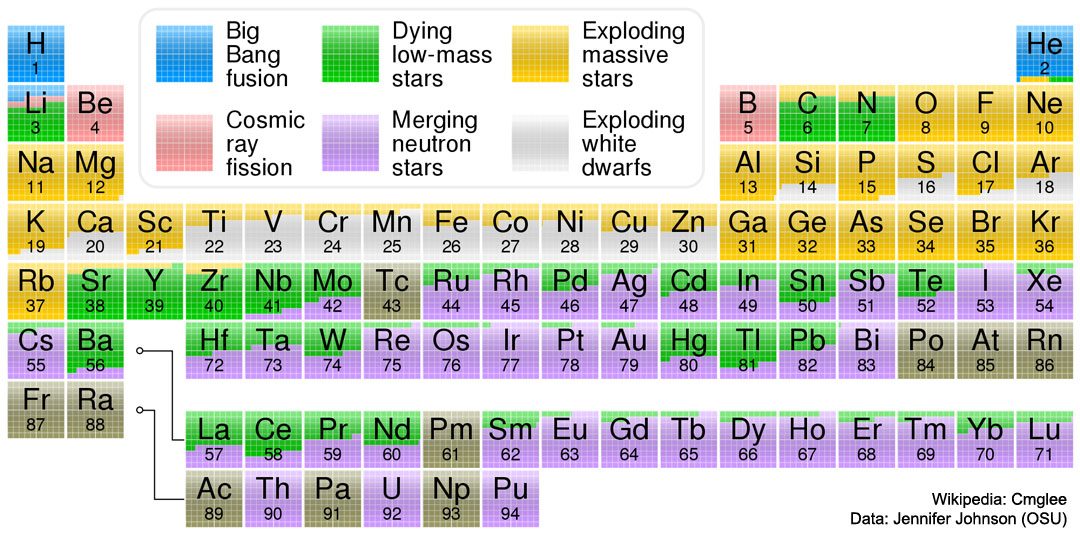
The hydrogen in your body, present in every molecule of water, came from the
Big Bang.
There are no other
appreciable sources of
hydrogen in the universe.
The carbon in your body was made by
nuclear fusion
in the interior of stars, as was the
oxygen.
Much of the iron in your body was made during
supernovas of stars that occurred
long ago and far away.
The gold in your jewelry was likely made from
neutron stars during collisions that may have been visible as short-duration
gamma-ray bursts
or gravitational wave events.
Elements like phosphorus and copper are
present in our bodies in only small amounts but are
essential to the functioning of all known
life.
The featured periodic table is
color coded to indicate
humanity's best guess as to the
nuclear origin of all known elements.
The sites of nuclear creation
of some elements, such as
copper,
are not really well known and are continuing topics of observational and computational research.
Happy Birthday in Heaven. Missing you so much. Thank you for all the wonders of love throughout our lives. You touched so many lives and yes, saved so many lives. You are the best. Love you always.
I continue to miss my lovely Bob, and speak to him each morning and every night. I pray for a message that all is well with him.
I breathlessly read this recent message from Anne's Diary on Unknown Country with Whitley Streiber's wonderful blog (adding it to my links) Unknown Country. This link is from Anne's Diary who has passed away and leaves messages for us all - the comments are wonderful too.
My friend told me a story he hadn’t told anyone for
years. When he used to tell it years ago people would laugh and say,
‘Who’d believe that? How can that be true? That’s daft.’ So he didn’t
tell it again for ages. But for some reason, last night, he knew it
would be just the kind of story I would love.
When he was a kid, he said, they didn’t use the word autism, they just
said ‘shy’, or ‘isn’t very good at being around strangers or lots of
people.’ But that’s what he was, and is, and he doesn’t mind telling
anyone. It’s just a matter of fact with him, and sometimes it makes him
sound a little and act different, but that’s okay.
Anyway, when he was a kid it was the middle of the 1980s and they were
still saying ‘shy’ or ‘withdrawn’ rather than ‘autistic’. He went to
London with his mother to see a special screening of a new film he
really loved. He must have won a competition or something, I think. Some
of the details he can’t quite remember, but he thinks it must have been
London they went to, and the film…! Well, the film is one of my
all-time favourites, too. It’s a dark, mysterious fantasy movie. Every
single frame is crammed with puppets and goblins. There are silly songs
and a goblin king who wears clingy silver tights and who kidnaps a baby
and this is what kickstarts the whole adventure.
It was ‘Labyrinth’, of course, and the star was David Bowie, and he was
there to meet the children who had come to see this special screening.
‘I met David Bowie once,’ was the thing that my friend said, that caught my attention.
‘You did? When was this?’ I was amazed, and surprised, too, at the
casual way he brought this revelation out. Almost anyone else I know
would have told the tale a million times already.
He seemed surprised I would want to know, and he told me the whole thing, all out of order, and I eked the details out of him.
He told the story as if it was he’d been on an adventure back then, and
he wasn’t quite allowed to tell the story. Like there was a pact, or a
magic spell surrounding it. As if something profound and peculiar would
occur if he broke the confidence.
It was thirty years ago and all us kids who’d loved Labyrinth then, and
who still love it now, are all middle-aged. Saddest of all, the Goblin
King is dead. Does the magic still exist?
I asked him what happened on his adventure.
‘I was withdrawn, more withdrawn than the other kids. We all got a
signed poster. Because I was so shy, they put me in a separate room, to
one side, and so I got to meet him alone. He’d heard I was shy and it
was his idea. He spent thirty minutes with me.
‘He gave me this mask. This one. Look.
‘He said: ‘This is an invisible mask, you see?
‘He took it off his own face and looked around like he was scared and
uncomfortable all of a sudden. He passed me his invisible mask. ‘Put it
on,’ he told me. ‘It’s magic.’
‘And so I did.
‘Then he told me, ‘I always feel afraid, just the same as you. But I
wear this mask every single day. And it doesn’t take the fear away, but
it makes it feel a bit better. I feel brave enough then to face the
whole world and all the people. And now you will, too.
‘I sat there in his magic mask, looking through the eyes at David Bowie and it was true, I did feel better.
‘Then I watched as he made another magic mask. He spun it out of thin
air, out of nothing at all. He finished it and smiled and then he put it
on. And he looked so relieved and pleased. He smiled at me.
‘'Now we’ve both got invisible masks. We can both see through them
perfectly well and no one would know we’re even wearing them,’ he said.
‘So, I felt incredibly comfortable. It was the first time I felt safe in my whole life.
‘It was magic. He was a wizard. He was a goblin king, grinning at me.
‘I still keep the mask, of course. This is it, now. Look.’
I kept asking my friend questions, amazed by his story. I loved it and
wanted all the details. How many other kids? Did they have puppets from
the film there, as well? What was David Bowie wearing? I imagined him in
his lilac suit from Live Aid. Or maybe he was dressed as the Goblin
King in lacy ruffles and cobwebs and glitter.
What was the last thing he said to you, when you had to say goodbye?
‘David Bowie said, ‘I’m always afraid as well. But this is how you can
feel brave in the world.’ And then it was over. I’ve never forgotten it.
And years later I cried when I heard he had passed.’
My friend was surprised I was delighted by this tale.
‘The normal reaction is: that’s just a stupid story. Fancy believing in an invisible mask.’
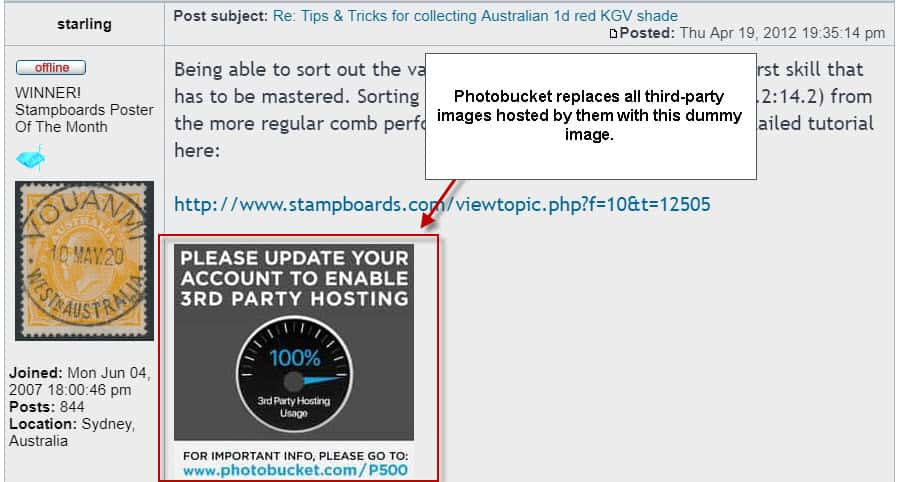
In case you like me are wondering what the heck is going on with this giant sign from Photobucket a company that many of us have had friendly relations with for years. Now one day I noticed many of my photos started to disappear and are replaced by this ugly unfriendly sign -
Here is the story behind these ugly demanding cover ups on the photos that I have been using for many years.
So friends bear with me while I dig back through all of my blog posts and change my photos out of photobucket and I suggest you do also - unless you can afford a $399 membership fee.
I would doubt that any of us who blog will be paying any type of fee such as this.
And not sure but many are saying we can't even unload our own pictures. I would suggest that we all let Photobucket know how very unhappy we all are.
I have personal photos of my family and could they actually take this photos also?
In 1969, the British writer Philip Pullman was walking down the
Charing Cross Road in London, when his consciousness abruptly shifted.
It appeared to him that ‘everything was connected by similarities and
correspondences and echoes’. The author of the fantasy trilogy His Dark Materials
(1995-2000) wasn’t on drugs, although he had been reading a lot of
books on Renaissance magic. But he told me he believes that his insight
was valid, and that ‘my consciousness was temporarily altered, so that I
was able to see things that are normally beyond the range of routine
ordinary perception’. He had a deep sense that the Universe is ‘alive,
conscious and full of purpose’. He says: ‘Everything I’ve written has
been an attempt to bear witness to the truth of that statement.’
What
does one call such an experience? Pullman refers to it as
‘transcendent’. The philosopher and psychologist William James called
them ‘religious experiences’ – although Pullman, who wrote a
fictionalised biography of Jesus, would insist that God was not
involved. Other psychologists call such moments spiritual, mystical,
anomalous or out-of-the-ordinary. My preferred term is ‘ecstatic’.
Today, we think of ecstasy as meaning the drug MDMA or the state of
being ‘very happy’, but originally it meant ekstasis – a moment
when you stand outside your ordinary self, and feel a connection to
something bigger than you. Such moments can be euphoric, but also
terrifying.
Over the past five centuries, Western culture has
gradually marginalised and pathologised ecstasy. That’s partly a result
of our shift from a supernatural or animist worldview to a disenchanted
and materialist one. In most cultures, ecstasy is a connection to the
spirit world. In our culture, since the 17th century, if you suggest
you’re connected to the spirit world, you’re likely to be considered
ignorant, eccentric or unwell. Ecstasy has been labelled as various
mental disorders: enthusiasm, hysteria, psychosis. It’s been condemned
as a threat to secular government. We’ve become a more controlled,
regulated and disciplinarian society, in which one’s standing as a good
citizen relies on one’s ability to control one’s emotions, be polite,
and do one’s job. The autonomous self has become our highest ideal, and
the idea of surrendering the self is seen as dangerous.
Yet
ecstatic experiences are surprisingly common, we just don’t talk about
them. The polling company Gallup has, since the 1960s, measured the
frequency of mystical experiences in the United States. In 1960, only 20
per cent of the population said they’d had one or more. Now, it’s
around 50 per cent. In a survey
I did in 2016, 84 per cent of respondents said they’d had an experience
where they went beyond their ordinary self, and felt connected to
something greater than them. But 75 per cent agreed there was a taboo
around such experiences.
There’s even a database of more than
6,000 such experiences, amassed by the biologist Sir Alister Hardy in
the 1960s and now mouldering in storage in Wales. They make for a
strangely beautiful read, a sort of crowdsourced Bible. Here is entry
number 208: ‘I was out walking one night in busy streets of Glasgow
when, with slow majesty, at a corner where the pedestrians were hurrying
by and the city traffic was hurtling on its way, the air was filled
with heavenly music, and an all-encompassing light, that moved in waves
of luminous colour, outshone the brightness of the lighted streets. I
stood still, filled with a strange peace and joy … until I found myself
in the everyday world again with a strange access of gladness and of
love.
I find it interesting that we are deeply involved with the spiritual world in movies, books and video games. Why does it seem that so much of today's life does want to keep our brains from questioning what used to be our deep connections with our spirits. Reading the above it's is very apparent that human beings are deeply connected to something greater than ourselves.
A day filled with beauty and happiness. I want to remember this day always.
Every experience you have is part of your story.
Every experience helps shape you into who you are.
You learn, you grow, and you carry that with you. Nobody can take that away.
Sometimes things feel heartbreakingly sad. Weave it into the fabric of who
you are. Look for the strength you know is inside you. Lean on those you
know will support you.
Sometimes it’s not the end of a story; it’s just time for one of the
characters to leave. And that can feel so painful for the characters left
behind. But the one that leaves never fully leaves. They are woven into the
fabric of who you are.
They have helped you to grow and to form; to know yourself better. They
will always be part of your story and part of who you are, with a special place
in your heart — whether they’re physically there or not.
Sometimes we have to let people go, even when we don’t want to, even if we
never imagined a future without them. Sometimes we have no choice, so we have
to make peace with that, as hard as it is.
We can struggle against it, we can resist. Or we can set the other person
free, and set ourselves free in the process.
Sometimes things look very different from how we thought they would. We
don’t get a say. We feel robbed of the chance to write that part of our story.
But we are still artists. We can’t control what happens to us. We can’t control
other people.
But we can control how we respond.
We can either choose love or fear. We can either close the gap between us
and anyone else by choosing love. Or we can open it by choosing fear.
Trust that you’ll be okay even when things happen that you don’t want or
expect. Trust that ultimately it’ll be for your highest good, and for the best,
even if you can’t see how at the moment.
Things will happen that take away the story you had planned. You need to
grieve for that. For the parts of the story you had so wanted to live, had
things been different. You need to grieve hard.
Just as hard for that as for the memories that have passed. You need to
grieve for it all.
And then you need to stand where you are right now, amongst the rubble. You
realize that you’ll never lose all that has gone before. It’s part of you for
life — part of your story and part of who you are.
You can take it forward in whichever ways you choose. You’ll carry it with
you — the love, the important bits.
When it comes to the future, you’ll realize these parts of the story were
only ever imagination anyway. It’s sad to lose a dream, to not get to play out
a story we had so wanted and imagined.
But when things happen that we can’t control, we have to change tack.
We realize that we still get to be exactly who we want to be, playing
whatever part we choose. It might just have a different background than what
we’d imagined. And that might look and feel very scary for a while.
But that’s
okay.
The most important thing is to remember who you are amongst it — all that
you are and all that you’ve got.
You’re still standing at the center of the story, and now more than ever you
need to be its creator and artist.
It’s okay to be scared. It’s normal to be scared when things change. To feel
a whole myriad of emotions: grief, anger, sadness, fear. They’ll all
come out to play.
But these emotions are there to help you navigate through the new terrain.
And they’re there to help pull you through to the other side.
The fabric of your story is woven into who you are. No part of the story is
ever wasted. Not a single bit. It’s got you to where you are right now. And
where you are right now is perfect — whole, enough.
Remember you will always have you. You’ll always have the people or the
parts of any story you want to keep with you. They are in your bones, and in
your heart.
So nothing is every truly lost, just transformed.
And if your story looks a little different from what you had planned,
it’s okay. You’re an artist, write a new one.
I have no idea where this story came from. One of those things that I saved from a message that I loved. Who would ever think that I saved this message for me, to keep my heart from despair and working it out so I can stay alive. Some days I truly don't want to, I just want to fade away to nothingness. But I still open my eyes in the mornings and wonder why I am still here, all alone.
But I need to share a zillion things right now, to find some meaning for me to still be here. And oh I so don't want to be.
Ep. 1: Joseph Campbell and the Power of Myth — ‘The Hero’s Adventure’
June 21, 1988
Bill Moyers and mythologist Joseph Campbell begin their
groundbreaking and timeless conversation with an exploration of the
classic hero cycle, including consistent and enduring hero patterns in
literature, real life and even the Star Wars films. Campbell
also encourages the audience to view parts of their own lives as heroic
journeys. In a clip from the first episode, Campbell encourages the
audience to discover what excites them, and make that the basis for
their personal journeys.
TRANSCRIPT JOSEPH CAMPBELL: We have not even to risk the
adventure alone, for the heroes of all time have gone before us. The
labyrinth is thoroughly known; we have only to follow the thread of the
hero path. And where we had thought to find an abomination, we shall
find a god. And where we had thought to slay another, we shall slay
ourselves. And where we had thought to travel outward, we shall come to
the center of our own existence. And where we had thought to be alone,
we shall be with all the world.
“People say that what we’re all seeking is a meaning for life. I
don’t think that’s what we’re really seeking. I think that what we’re
seeking is an experience of being alive, so that our life experiences on
the purely physical plane will have resonances with our own innermost
being and reality, so that we actually feel the rapture of being alive.”
―
Joseph Campbell,
The Power of Myth
Life has taken me on another painful journey of my life. I have been traveling through so many dark days that I felt I would never live again. And I think I really did not want to. But I have been pushed into living again because I still have some memory to share of my love.
My beloved husband has died of leukemia. It was sudden, and brutal and the hardest thing I can imagine. It came from nowhere and he died within a month of illness. My world was turned upside down and I wanted to die with him. I can't begin to imagine living without him. We were married for 51 years and he was my soul mate.
Darkest covered my being and evil attacked me and my children who stayed to take care of me. I know evil and it is real, and it attacked us in earnest. And I was willing to give up and be done.
But then out of nowhere a message was left in my hands from my dear husband, and left in the most unlikely spot, in his work desk. This message came into me from the strangest place - this blessing for me and family to read once a day and believe in -
The following protection prayer is based on the
book Remarkable Healings, A Psychiatrist Discovers Unsuspected Roots of
Mental and Physical Illness, by Shakuntala Modi, M.D., Hampton Roads
Publishing Company, ISBN 1-57174-079-1. Her findings are remarkably
similar to the traditional shamans point of view that that man's
spiritual and physical health is often influenced by negative entities
and energies, and that the Divine and the light beings are always there
to help us. The protection prayer is to be done twice a day, once
when you go to bed in the evening and once when you wake up in the
morning.
I began to recite this prayer twice a day - and it wasn't a rapid healing of my heart. But yes, it still weeps but I feel loved and protected and safe, and my children too.
Many bad things happened to all of us - I suffered a stroke and was rushed to the hospital and it seemed that I would be lost. I could not speak but I could remember my protection prayer. Daily my health improved and my speech came back. It still has work to do, but I have been healed that is amazing to the doctors but still some strange illness in my heart has yet to be monitored.
Most of my heartbreak is still inside of me, but I know that I am being watched over and guarded with safety.
I felt that it is time to speak of my life and love and the joy of being. The divine has entered my being and surrounds me with love and blessing.
I miss our lovely forum and so wish it to be sharing with each other again in a truthful real ways.
This message came to me today as I listened quietly with tears of love and it's time to be there for love.
“A friend … awakens your life in order to free the wild possibilities within you.”
It has taken me years and years to understand that we are all here on a quest to find ourselves. All the myriad things to distract you from finding out who you really are. And believing who you are. And fanning that little flame inside of you into a bonfire of possibility. Of course this world doesn't help at all, but if you are lucky enough to pay attention, that little message inside you can turn into a wonderful concert and you are born again, "with eyes that can finally see".
A Homily for Palm Sunday
by Rev. Steven Marshall
The Temporary Triumph of the Light before its Obscuration
Palm Sunday marks the beginning of Holy Week. Holy Week recounts a complex
and meaningful series of mythic events which lead to the Resurrection on
Easter Day. Palm Sunday represents a preparation, a setting up, for the
Resurrection to occur. As Gnostics we may differ from the mainstream in
our interpretation of these events, as to whether they are literal history
or strictly symbolic, or something in between. What is important for us
to focus on is that these events recount an interior experience of archetypal
dimensions. It does not matter if the events of Holy Week are historical
or purely mythical; they have a deep and archetypal meaning to the Gnostic
soul. The series of events in Holy Week, beginning with Palm Sunday, describe
a process of our own apotheosis and psychological transformation. Blind
belief in historical events is not going to transform us; we must cultivate
an experience of this archetypal reality. For this reason we celebrate
Palm Sunday not as a commemoration of an historical event but as an archetypal
mystery and another step in the process of psychological and spiritual
transformation.
Reading the Gnostics was a piece I wrote to accompany A Dictionary of
Gnosticism. In a modified form it will be one of the introductory
essays in Gnostic Tendencies, intended to whet your appetite for reading the Nag Hammadi Library.
Reading the Gnostics
And he [Jesus] said, “The kingdom is like a wise fisherman who cast
his net into the sea; then he drew it up from the sea, full of little
fish from below. Among them he found one good large fish. So he threw
all of the little fish back down into the sea without regret. Whoever
has ears to listen, let him listen.”
This parable, distinctively in the voice of Jesus, is found nowhere in the New Testament. It comes from the Gospel of Thomas, the best known of the ancient writings found at Nag Hammadi, Egypt in 1945. The Gospel of Thomas
is overwhelmingly the most famous and most read of the texts found in
this cache for two reasons:- it has a good claim to contain sayings of
Jesus that are as old and as authentic as those in the canonical
gospels, and it is, at least superficially, easy to understand. It is
one of nearly fifty different texts or tractates in the Nag Hammadi
library, the bulk of which are Gnostic.
Gnosticism was a Christian-related religion that thrived in the
second to fourth centuries CE, though its origins may have been a little
earlier and it persisted in various forms much later. It emphasised the
importance of gnosis—experiential knowledge of the divine—within a
framework of myth and ritual. No two texts or Gnostic groups agreed on
the details of the Gnostic myth, but it typically involves the
following: the supreme, unique God emanates divine beings known as
aeons. These form the Pleroma, the fullness of God. However, the
youngest of these aeons, Sophia, falls from grace and in doing so
creates the material world, which is ruled by her bastard offspring the
demiurge, the craftsman of our world, often called Yaldabaoth. The
demiurge and his minions create the soul and body of mankind but are
tricked into incorporating an element of spirit in the human makeup.
Thus humans contain a divine spark which may be nurtured and fanned into
a flame. The subsequent history of mankind involves a struggle for the
human soul, on the one side the demiurge and his archons, on the other a
series of saviours or revealers who teach mankind how to attain gnosis
and develop the spiritual seed within them. Abbreviated and simplified
in this way, the Gnostic myth is understandable and appealing . However,
the original Gnostic texts are more concerned with their individual
elaborations of the myths than with clarity, and can be quite obscure.
Not all of the Nag Hammadi texts are difficult to penetrate. The Exegesis on the Soul
(despite its awkward title) is a beautiful and straightforward account
of the fall of the soul, personified as a young woman who drifts into
prostitution and is abused by thieves and adulterers but who eventually
repents and returns to her father and, in a daring use of sexual
imagery, may couple with the bridegroom in the bridal chamber.
Thunder: Perfect Mind is a striking proclamation by a female
voice, which includes fascinating, contrary statements —“I am the whore
and the holy, I am the wife and the virgin.” Thunder has been
adapted as a musical piece by David Tibet’s Current 93 band, and even
into an advertisement for Prada perfume directed by Ridley and Jordan
Scott.
Elaine Pagels won
popular and scholarly acclaim for her revolutionary interpretation of
the early Christian Church in “The Gnostic Gospels.” Then unthinkable
personal tragedy led her to the subject of a new book: What is Satan?